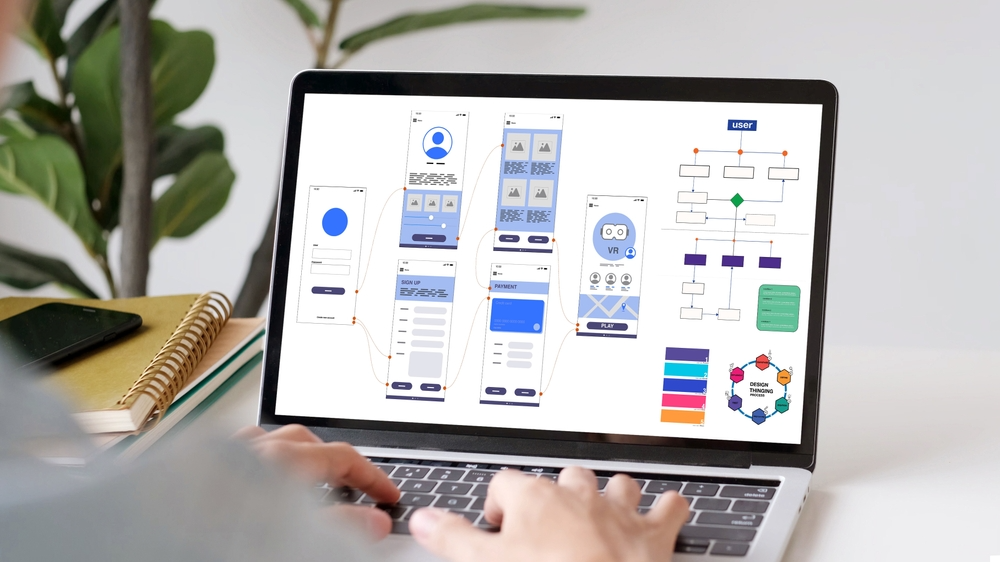
The 10 most common types of mobile apps represent the diversity of functions that users demand today. From communication to entertainment, apps are part of our daily lives and have transformed the way we interact with the digital world.
In this article, you will learn about the most used apps, how mobile app types are classified, and what trends are shaping the future of the market. We will also explore recent statistics and how companies like BLACKFOR can help you develop the ideal app for your business.
What are mobile app types?
When we talk about mobile app types, we are referring to two dimensions:
- The development technology: how they are built and distributed.
- Native: developed specifically for Android or iOS, offering better performance and access to all device features.
- Hybrid: created with frameworks like React Native or Flutter, they work on multiple operating systems with a single codebase.
- Web apps: accessible from the browser, do not require download and are usually lighter.
- PWA (Progressive Web Apps): a hybrid between web and app, with advanced features such as push notifications and offline use (CleverTap, 2024).
- The functionality: the main purpose they fulfill.
- Communication, social networks, entertainment, games, shopping, finance, productivity, health, education, etc.
Therefore, when talking about the 10 types of mobile applications, we cover both "how they are built" and "what they are used for".
What are the 10 most used apps?
The global and regional ranking of the most popular apps changes every year, but some remain at the top due to their relevance in daily life:
- Instagram, TikTok and Facebook: social media apps that concentrate the attention of millions of users due to their ability to create communities and share content.
- WhatsApp Messenger and Telegram: essential for fast communication, used in personal and professional settings.
- Spotify and YouTube: leaders in music and on-demand video.
- Temu and Amazon: examples of how mobile shopping has revolutionized e-commerce.
- CapCut: mobile video editing is trending, driven by content creation on social media.
- ChatGPT: artificial intelligence applied in mobile apps has become a global phenomenon (Marketing4eCommerce, 2025).
These apps perfectly exemplify some of the 10 most relevant types of mobile apps: messaging, social media, streaming, editing, e-commerce, and productivity.
Top 10 most popular types of mobile apps
1. Instant messaging apps
WhatsApp, Telegram, Messenger, and Signal dominate this segment. These apps allow you to send messages, voice notes, files, and even make video calls.
- In Mexico, more than 90% of smartphone users use WhatsApp as their primary means of communication (Branch, 2025).
- The trend is for messaging apps to integrate more features, such as mobile payments or mass broadcasting channels.
2. Social media apps
Social media platforms such as Instagram, TikTok, and Facebook are essential for digital life. They not only connect people, but also serve as showcases for brands and content creators.
- In 2025, Mexico reached 93 million social media users, equivalent to 70.7% of the population (Branch, 2025).
- These apps concentrate a large portion of digital advertising investment, making them a key channel for businesses.
3. Video and Music Streaming Apps
Platforms such as YouTube, Netflix, and Spotify lead multimedia consumption.
- According to AppMySite (2025), 73% of internet users watch videos on their smartphones every day.
- Mobile streaming already represents more than 60% of global data traffic.
4. Online Shopping Apps
Mobile e-commerce is growing exponentially. Examples such as Temu, Amazon, and Mercado Libre show how consumers prefer to shop from mobile apps.
- In 2024, more than 60% of online purchases in Latin America were made on mobile devices (Statista, 2025).
- These apps integrate secure payment systems, personalized recommendations, and faster shipping.
5. Productivity and Collaboration Apps
Zoom, Google Workspace, Notion, and Slack have changed the way we work. They are essential for remote teams and distributed organizations.
- In 2025, more than 75% of companies in Mexico use mobile collaboration apps (El País, 2025).
- These apps improve efficiency and reduce operating costs.
6. Gaming Apps
Mobile gaming is one of the most profitable sectors. Games like Free Fire, Roblox, and Candy Crush lead in downloads.
- The global mobile gaming market exceeded $90 billion in revenue in 2024 (AppMySite, 2025).
- This segment combines entertainment, socialization, and monetization through microtransactions.
7. Editing and Utility Apps
CapCut, Canva, and Adobe Express are examples of apps that allow users to create content easily from their mobile devices.
- The rise of content creators has driven the demand for these apps.
- This category also includes utilities such as Google Maps, cloud storage, or camera apps.
8. Fintech and Mobile Banking Apps
BBVA, Nu, and Mercado Pago lead in usage in Latin America. These apps allow users to pay, save, and invest from their smartphones.
- According to El País (2025), more and more Mexicans prefer mobile banking over using cash.
- The future points to integrating artificial intelligence and biometrics for greater security.
9. Education Apps
Duolingo, Coursera, and Khan Academy have democratized online learning.
- More than 40% of young people in Mexico use educational apps as a supplement to their studies (Branch, 2025).
- The trend is adaptive learning, where the app personalizes the content according to the user's level.
10. Health and Fitness Applications
MyFitnessPal, Headspace, or Nike Training Club are clear examples.
- After the pandemic, interest in digital health grew by 65% in downloads (Statista, 2025).
- These apps offer routines, nutrition tracking, sleep monitoring, and mental well-being.

Statistics showing the magnitude of the market
- In 2025, Mexico reached 127 million mobile connections, equivalent to 96.5% of the population (Branch, 2025).
- Globally, users spend an average of 4.5 hours per day using mobile apps (AppMySite, 2025).
- Apps for social media and messaging account for more than 40% of mobile usage time.
These figures confirm that the 10 types of mobile applications are not just a trend, but an integral part of our digital lives.
When to consider developing a mobile app?
The decision to create an app depends on the business objectives:
- Direct sales: an e-commerce is the best option.
- Customer connection: social or messaging apps allow for greater interaction.
- Internal optimization: productivity and collaboration tools.
- Sector innovation: healthcare, education, and fintech offer opportunities for differentiation.
This is where the importance of having a specialized team comes in.
BLACKFOR: experts in mobile app development
At BLACKFOR, you can develop any of the 10 types of mobile apps. Their team masters native, hybrid, and progressive technologies, offering customized and scalable solutions.
Furthermore, they integrate strategies for user experience (UX) design, digital security, and agile methodologies to ensure high-performance apps. Whether you want a sales app, an educational app, or a healthcare app, BLACKFOR turns your idea into a competitive product in the market.
The power of the 10 types of mobile apps
The 10 types of mobile apps reflect how we live, work, and entertain ourselves in the digital age. From WhatsApp to Spotify, passing through Temu and Duolingo, these apps have transformed entire industries.
Investing in the right mobile app is a strategic decision. And if you are looking for a reliable partner for the development of your app, BLACKFOR is the ideal ally that can help you stand out in an increasingly competitive market.